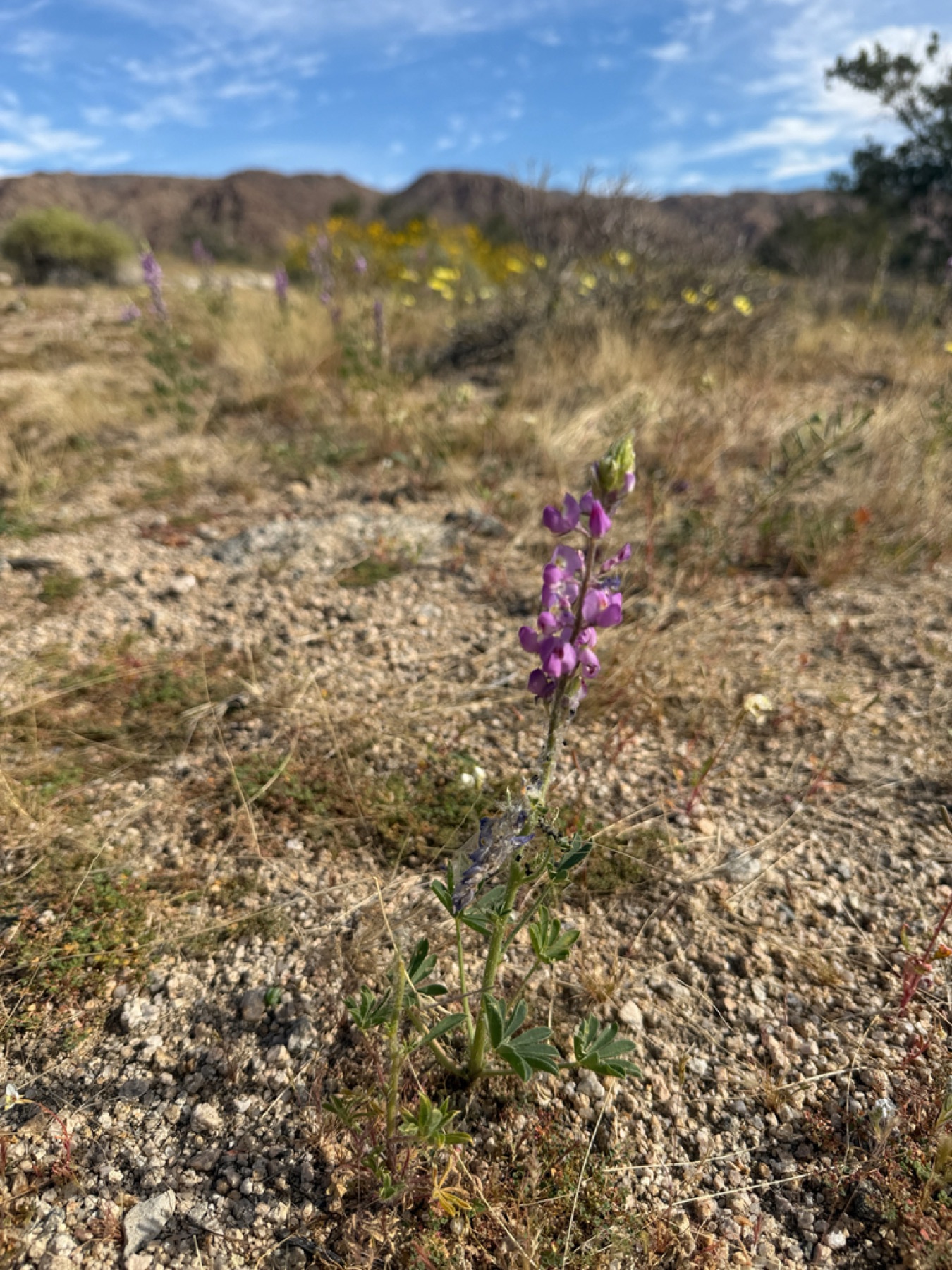
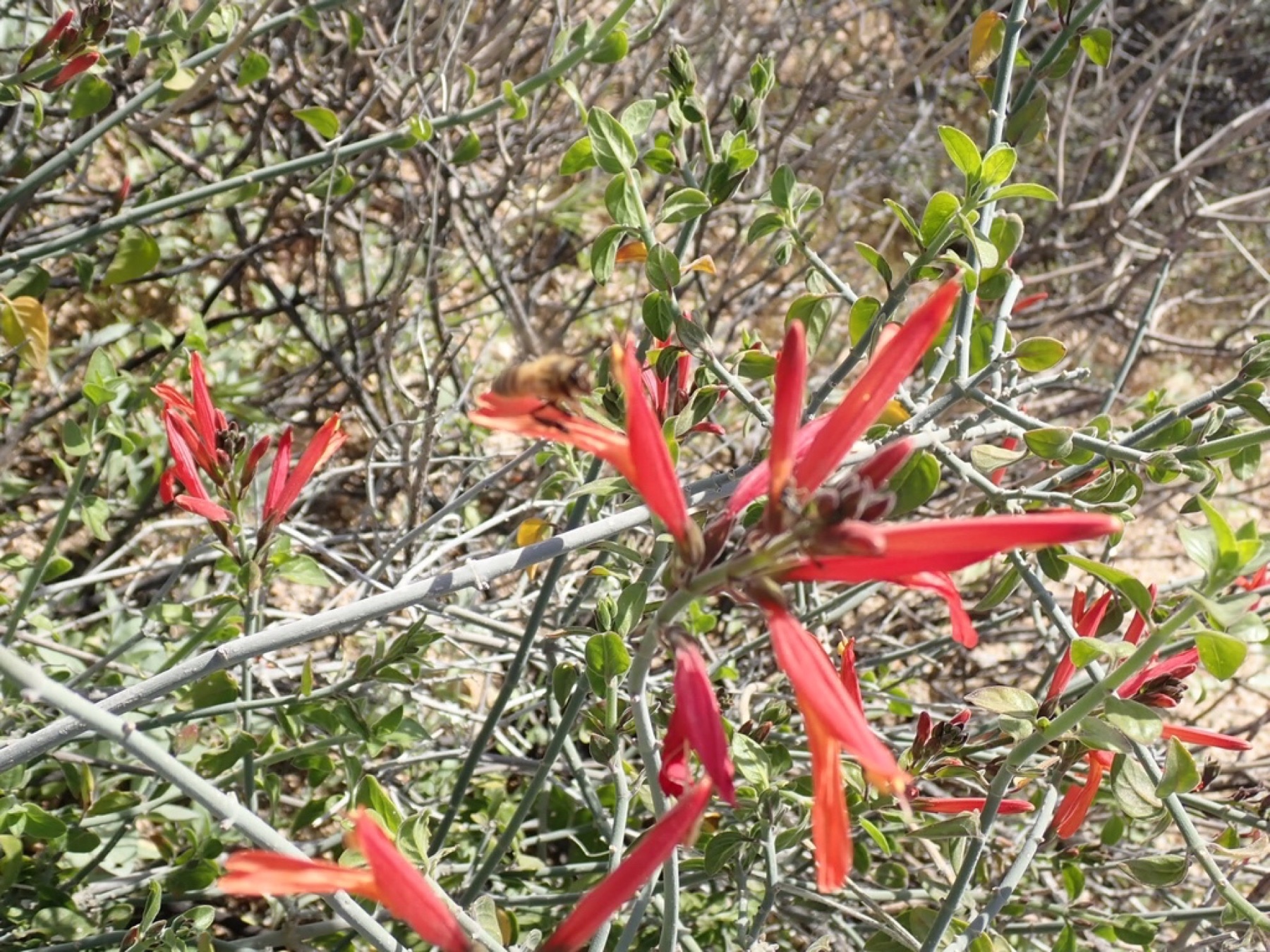
Desert Dandelion
Malacothrix glabrata · Asteraceae
- Form
- Annual herb
- Height
- 4-18 in
- Sun
- Full Sun
- Water
- Very Low
- Blooms
- Feb, Mar, Apr, May
- Pet toxicity
- Unknown
- Habitat
- Desert
🌿 California native
Quick facts
- Habitat: Desert, sandy flats, washes
- Form / size: Spring annual, 4-18 in
- Sun: Full sun · Water: Winter rain only
- Blooms: Late winter-spring · Pollinator value: Moderate
Description
A bright yellow desert annual that can carpet sandy flats after good winter rain. The flower heads look dandelion-like, but the plant is a native desert wildflower rather than a lawn weed.
Wildlife & pollinators
Native bees and flies visit the spring flowers during desert bloom years.
Habitat & range
Desert washes, sandy flats, bajadas, open desert scrub, and wildflower fields in the Mojave and Colorado deserts.
In the garden
Best for desert wildflower seed mixes and sandy, low-water demonstration gardens. It needs open soil and winter rain timing.
Propagation
From seed sown in fall. Germination depends heavily on winter rain and open sandy soil.
Where to see it near you
- iNaturalist — observed in Southern California
- Desert washes and sandy flats after winter rain.
Problems
Unreliable in ordinary gardens because it follows rainfall pulses. Avoid overwatering.
Sources
Commonly confused with
🌿 Common dandelion Taraxacum officinale rosette lawn weed with milky sap; desert dandelion is a native annual of desert bloom fields.
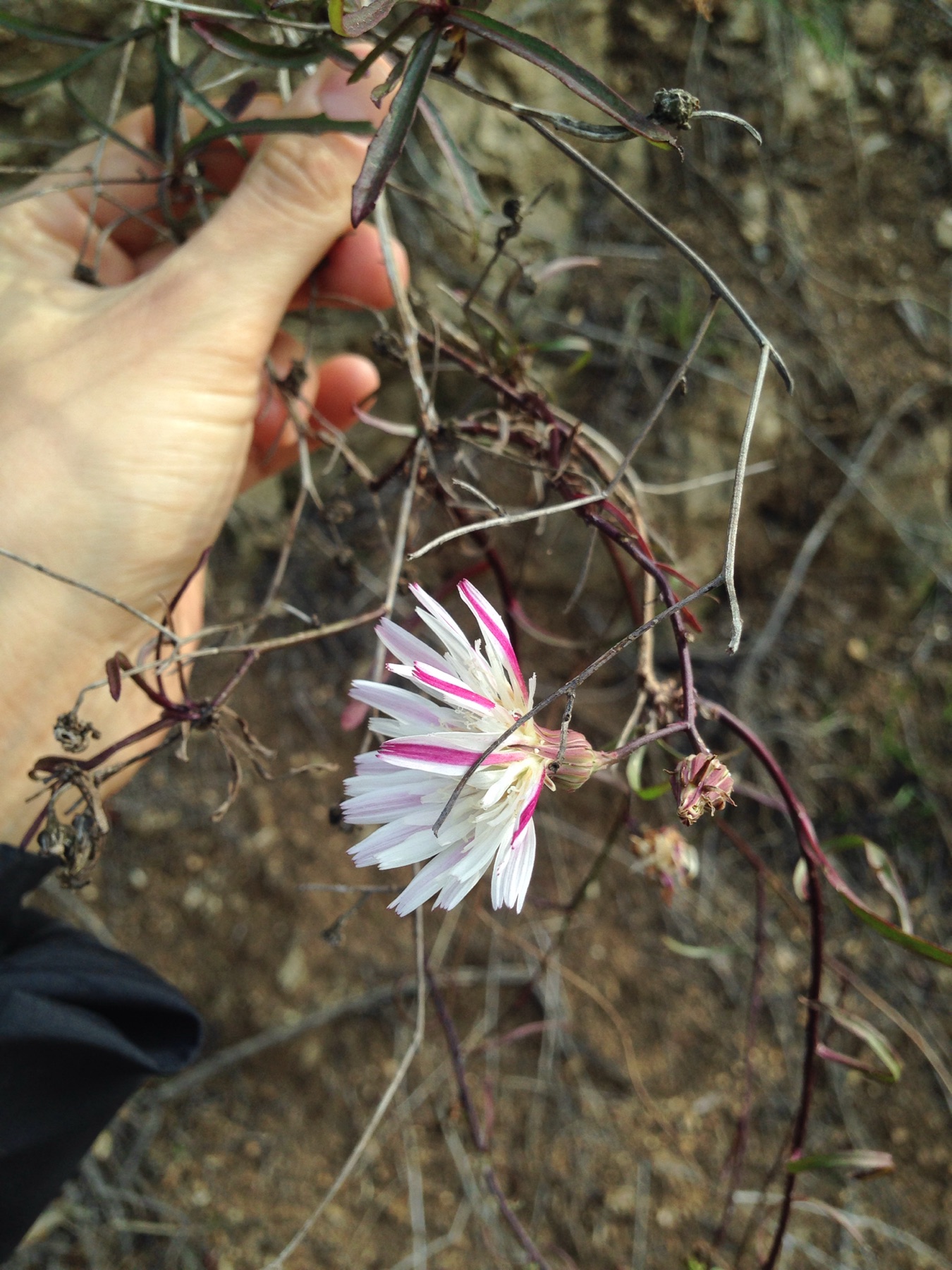 Cliff Aster 🌿 Malacothrix saxatilis pale flowers and rocky scrub habitat; desert dandelion is yellow and desert-sand oriented.