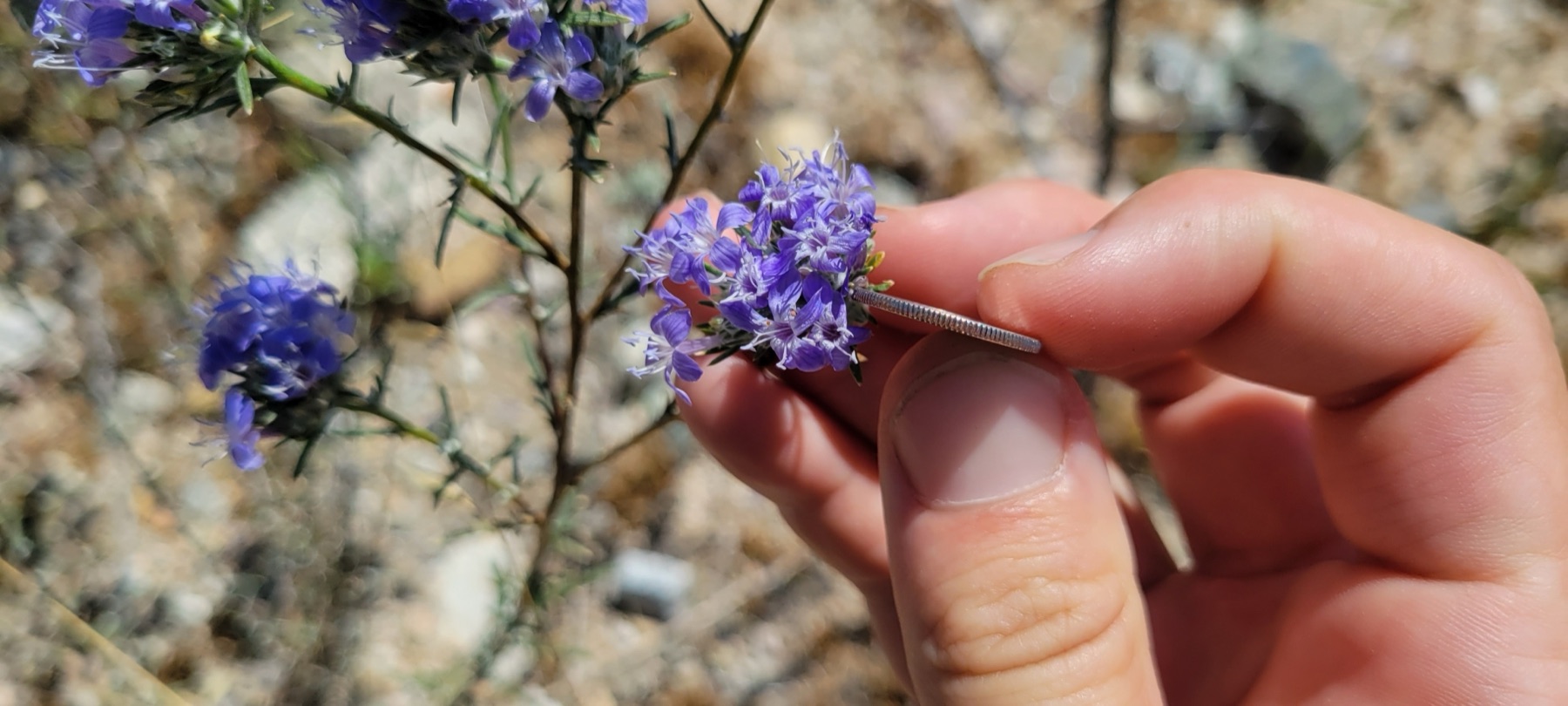
Emory's Rockdaisy
Perityle emoryi · Asteraceae
- Form
- Annual herb
- Height
- 4-18 in
- Sun
- Full Sun
- Water
- Very Low
- Blooms
- Feb, Mar, Apr, May
- Pet toxicity
- Unknown
- Habitat
- Desert
🌿 California native
Quick facts
- Habitat: Desert, rocky slopes, washes
- Form / size: Small annual, 4-18 in
- Sun: Full sun · Water: Winter rain only
- Blooms: Late winter-spring · Pollinator value: Moderate
Description
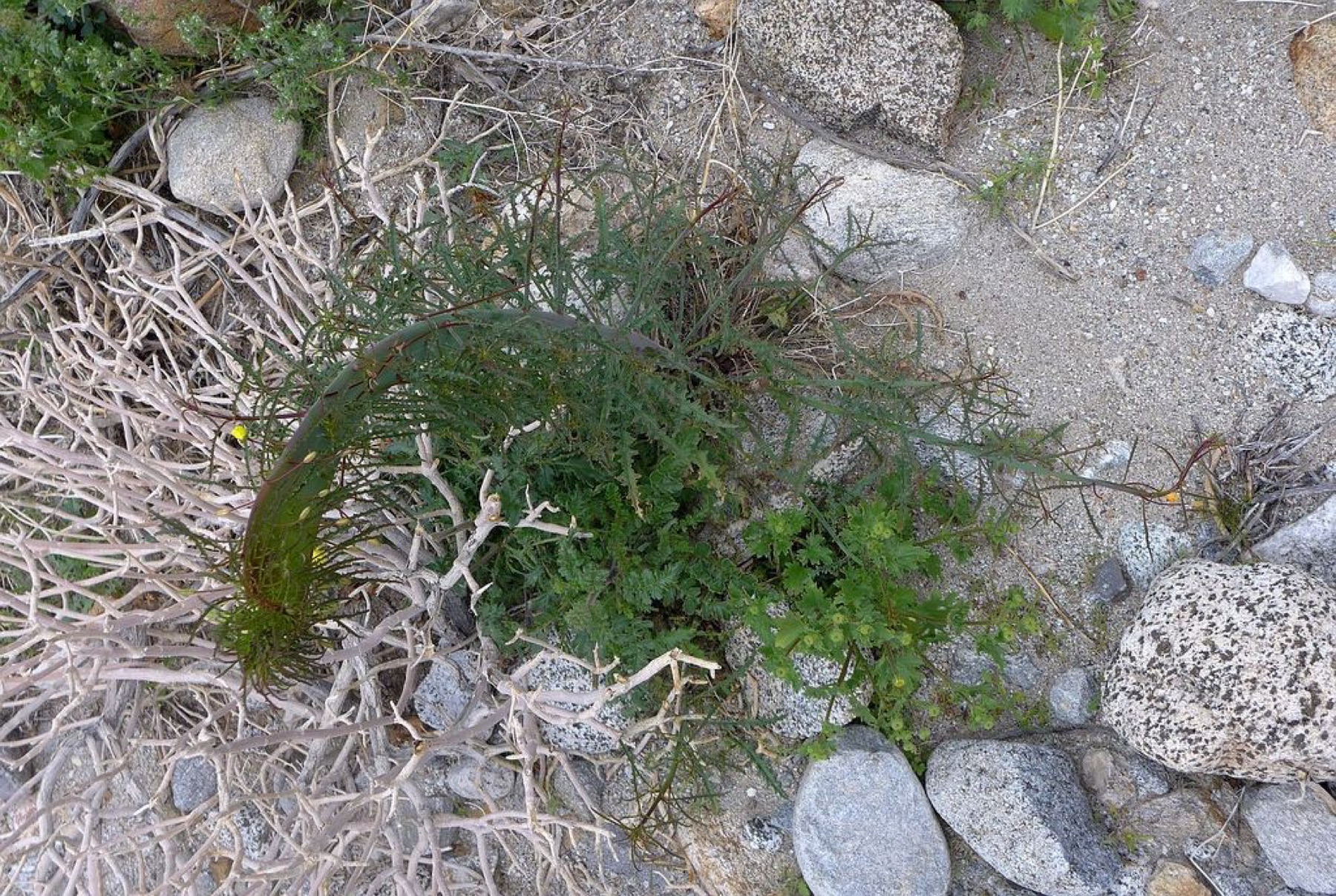
A small desert annual with many white daisy-like flower heads and yellow centers. It often grows from cracks, gravel, or rocky wash edges after winter rain.
Wildlife & pollinators
Native bees and flies visit the spring flowers during desert bloom pulses.
Habitat & range
Rocky desert slopes, washes, gravel flats, and desert scrub across Southern California deserts and the broader Southwest.
In the garden
Best for desert wildflower or rock-garden experiments with open mineral soil and winter rainfall timing.
Propagation
From seed sown in fall. Germination depends on winter rain and open soil.
Where to see it near you
- iNaturalist — observed in Southern California
- Rocky desert washes and slopes after winter rain.
Problems
Unreliable outside rainfall years. Avoid watering it like a perennial.
Sources
Commonly confused with
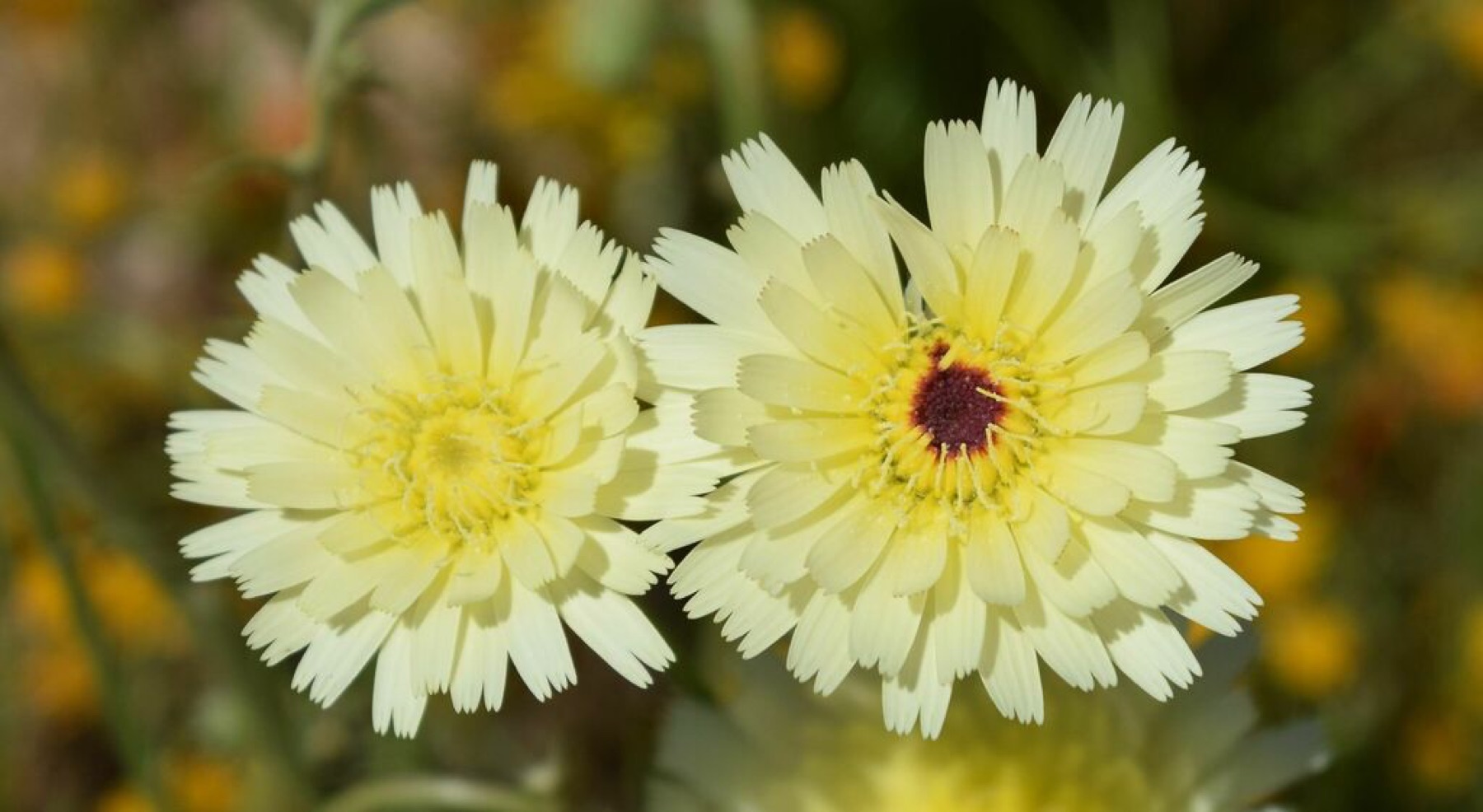 Desert Dandelion 🌿 Malacothrix glabrata yellow flower heads; Emory's rockdaisy is white-rayed with yellow centers.
 🌿 Tiny desert asters use rocky habitat, leaf shape, and flower size for confirmation.