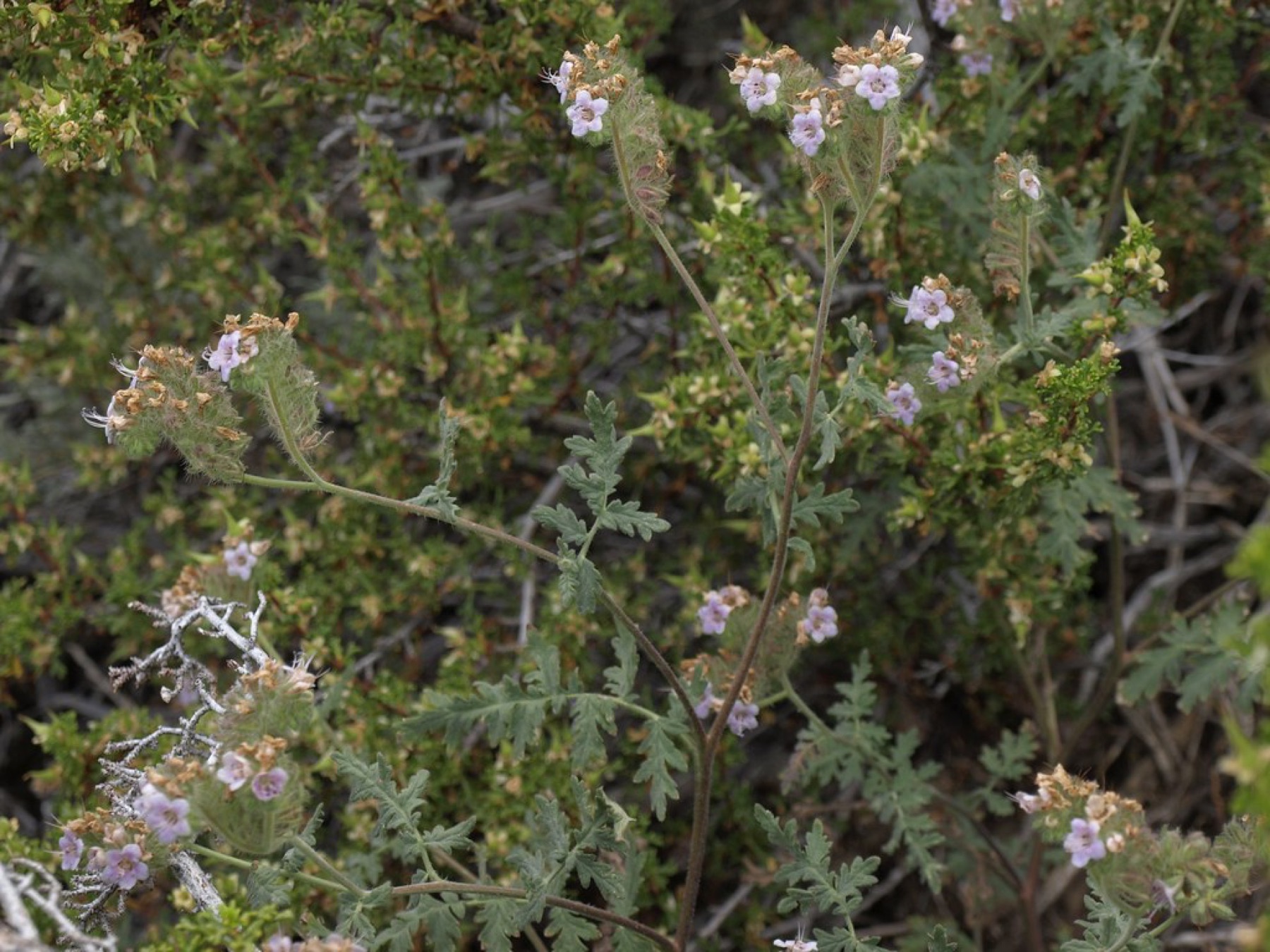
Mission Manzanita
Xylococcus bicolor · Ericaceae
- Form
- Shrub
- Height
- 6-20 ft
- Sun
- Full Sun
- Water
- Very Low
- Blooms
- Jan, Feb, Mar, Apr
- Habitat
- Coastal Sage Scrub · Chaparral
🌿 California native
Quick facts
- Habitat: Coastal Sage Scrub and Chaparral on dry slopes and canyons
- Form / size: Broad evergreen shrub, often 6-20 ft
- Sun: Full sun · Water: Very low
- Blooms: Winter-spring · Pollinator value: Moderate
Description
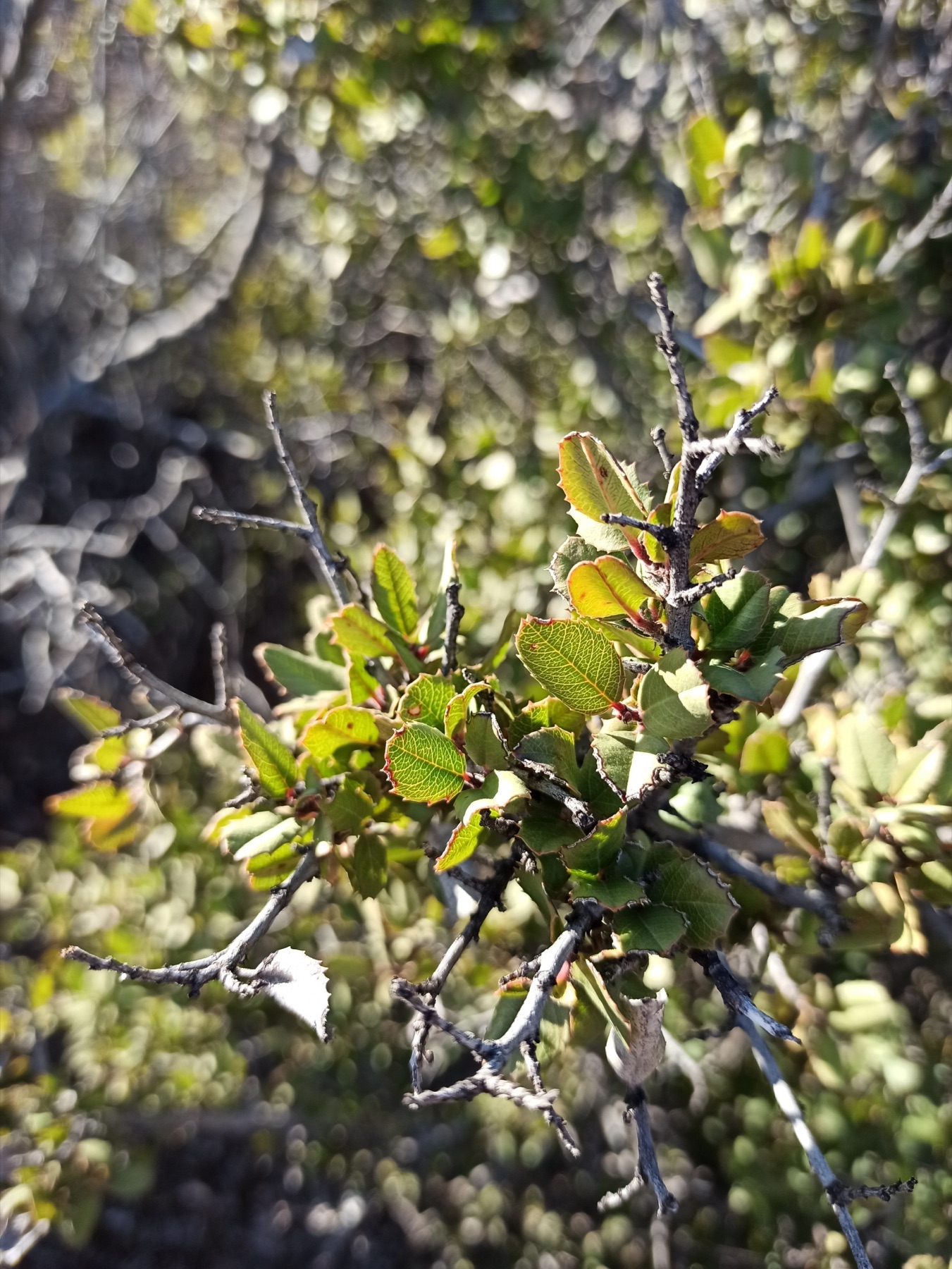
An old-growth looking Southern California shrub with heavy dark leaves, pale undersides, red-gray bark, and hard dark fruits. Up close it reads as burlier and less refined than the true manzanitas, with a tougher leathery texture and a more canyon-slope presence.
Indigenous & historical use
The Luiseño people, whose territory covers portions of Southern California within the plant’s native range, prepared mission manzanita berries by bruising ripe fruit and soaking it overnight in cold water to create a beverage with a cider-like character. The Kumeyaay employed a similar method: Delfina Cuero, a Kumeyaay elder, described soaking ripe berries to produce a cooling drink, using the Kumeyaay name Haasill for the plant.
Ecological role
California thrasher and California scrub jay consume its seeds, while Anna’s hummingbird feeds on nectar from the winter flowers. Various birds nest within the plant’s dense branching structure and use it for cover. Unlike some chaparral species, mission manzanita does not require fire to germinate; instead, it survives wildfire by resprouting from its base after the above-ground portions burn away. This resprout mechanism works well unless a second fire follows before the plant has time to regenerate, in which case the plant is likely to die.
Habitat & range
Dry coastal and inland foothill slopes in Southern California, especially in coastal sage scrub, mixed scrub, and chaparral transitions.
In the garden
Useful as a structural evergreen shrub for dry native plantings where there is room for a large, slow, durable plant. Give it drainage and avoid summer watering once established.
Propagation
Usually from seed or cuttings in nursery production. Established plants dislike root disturbance.
Where to see it near you
- iNaturalist — observed in Southern California
- Dry foothill canyons, coastal slope scrub, and chaparral margins.
Problems
Can suffer in heavy clay or under repeated summer irrigation. Give it air, drainage, and room.
Sources
- Calscape · iNaturalist · Wikipedia
- Indigenous use: Wikipedia: Xylococcus bicolor (Uses), citing Delfina Cuero’s account of Kumeyaay use
Commonly confused with
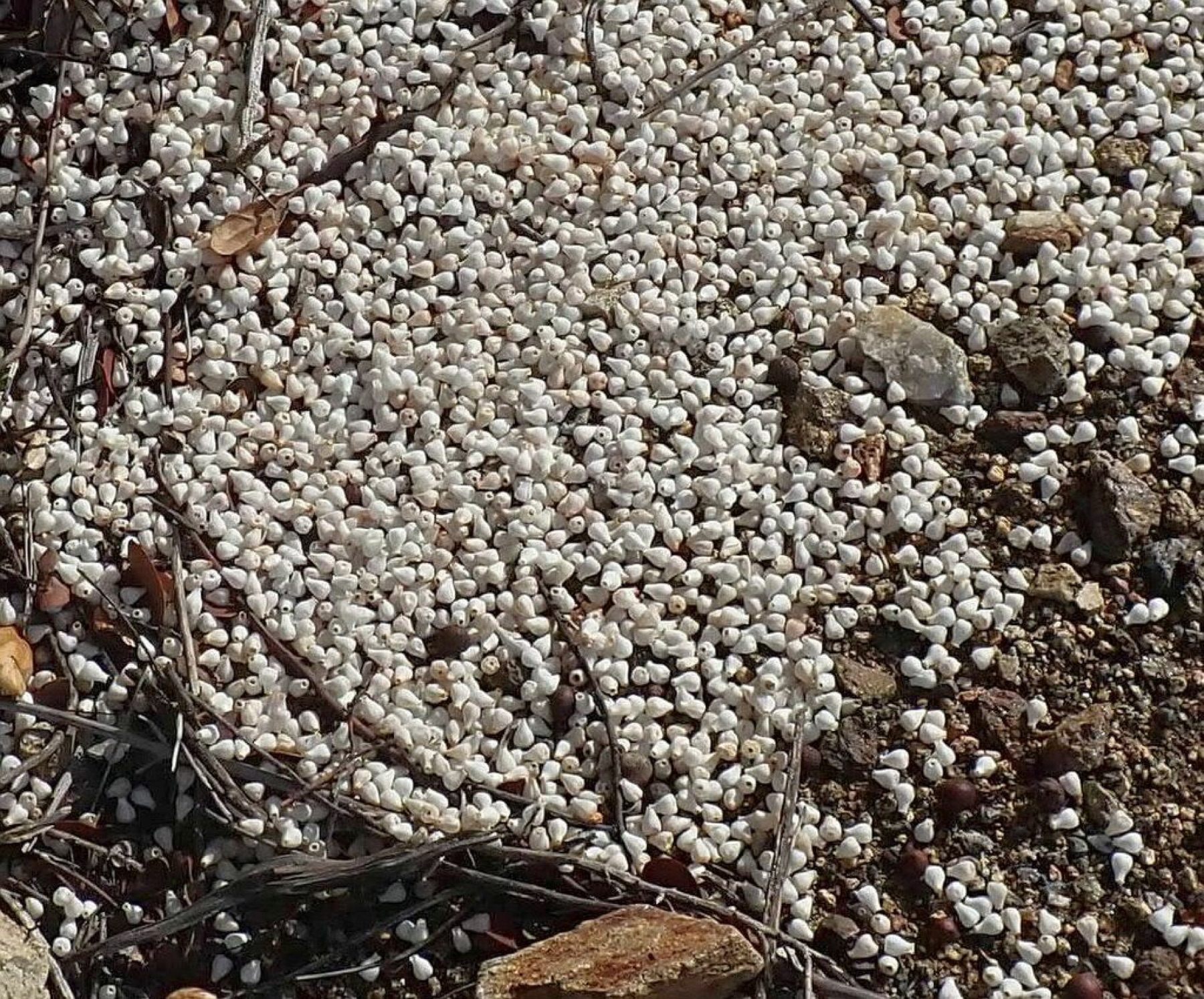 Big Berry Manzanita 🌿 Arctostaphylos glauca true manzanitas usually show smoother red bark, urn-shaped flowers, and berries that look more obviously manzanita-like.
 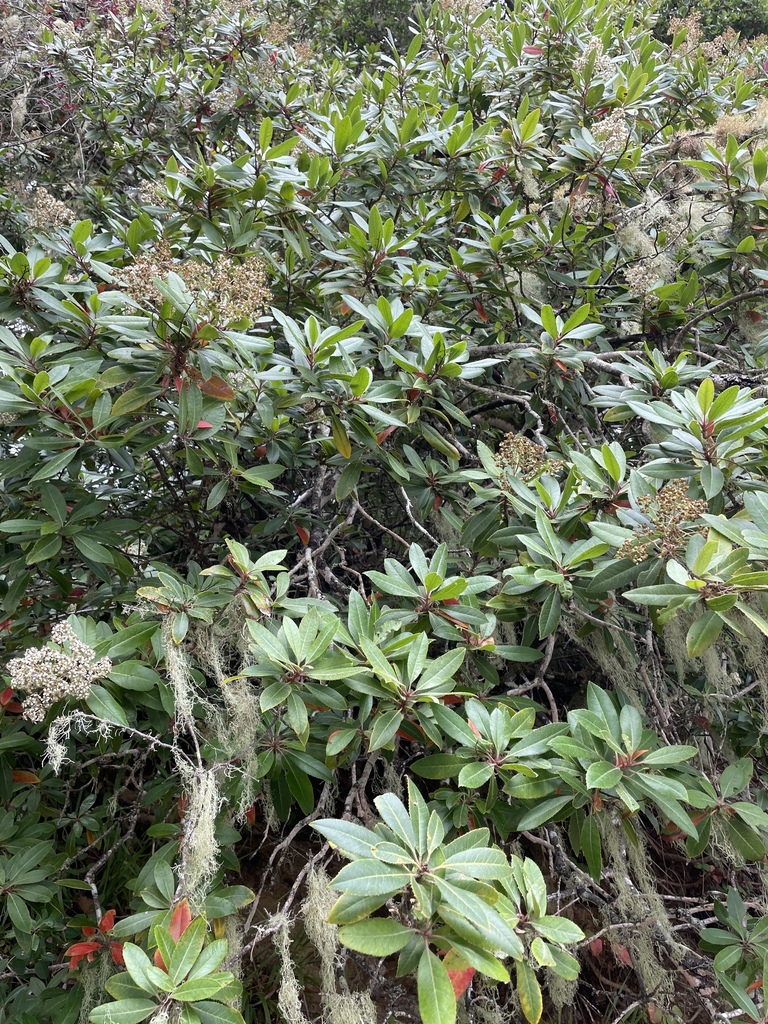 Toyon 🌿 Heteromeles arbutifolia toyon has serrated leaves and bright red berry clusters; mission manzanita has entire leaves and dark woody fruits.