Purple Sage
Salvia leucophylla · Lamiaceae
- Form
- Shrub
- Height
- 3–6 ft
- Sun
- Full Sun
- Water
- Very Low
- Blooms
- Mar, Apr, May, Jun
- Habitat
- Coastal Sage Scrub · Chaparral
🌿 California native
Quick facts
- Habitat: Coastal Sage Scrub, Chaparral, dry slopes
- Form / size: Aromatic shrub, 3–6 ft
- Sun: Full sun · Water (established): Very low
- Blooms: Spring–early summer · Pollinator value: High
Description
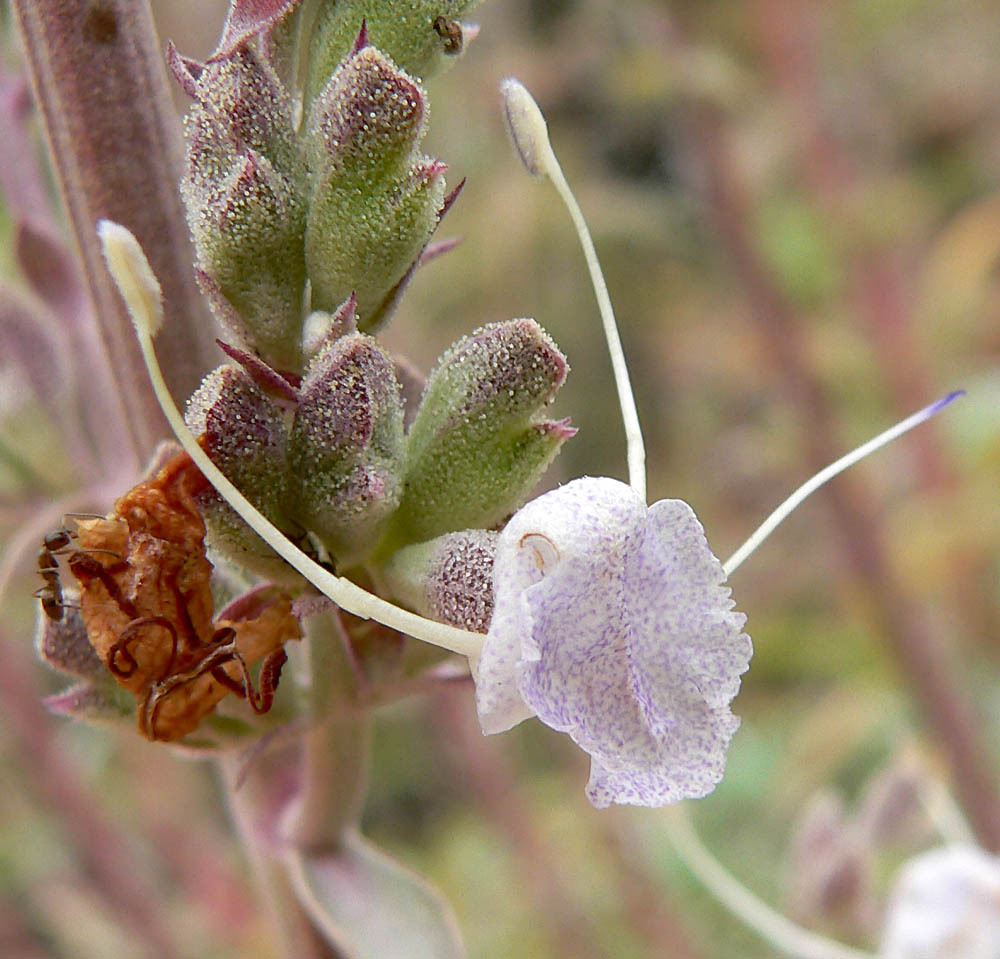
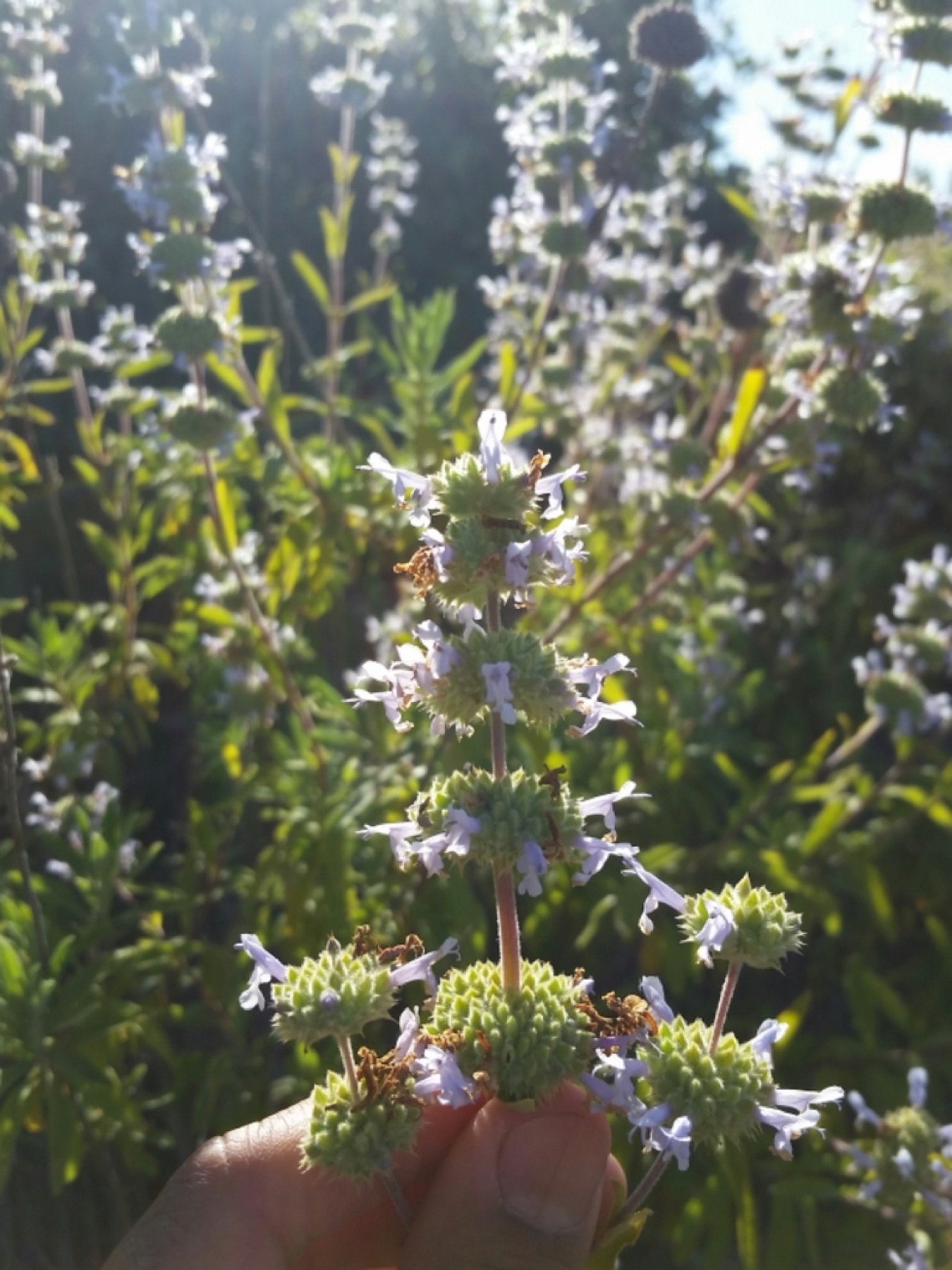
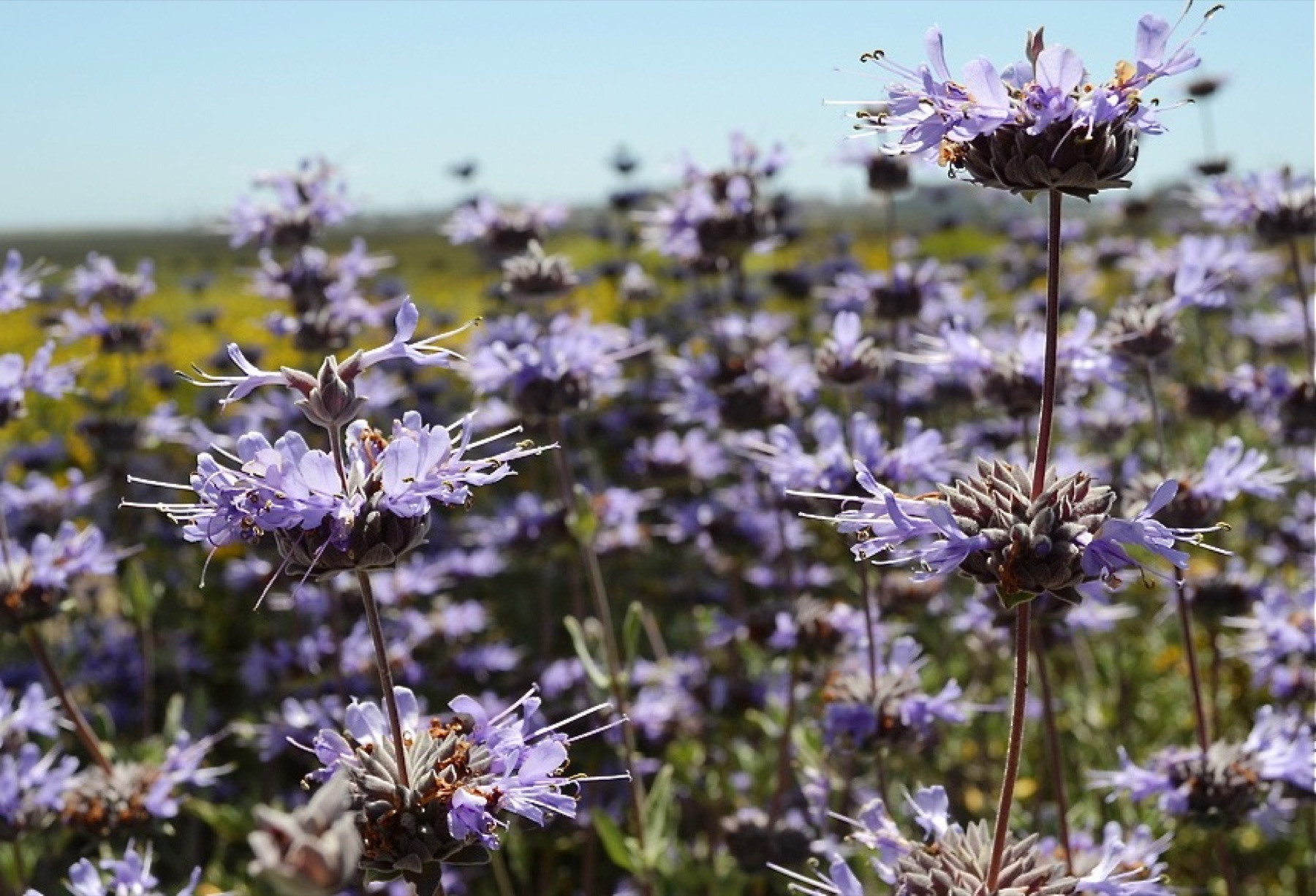
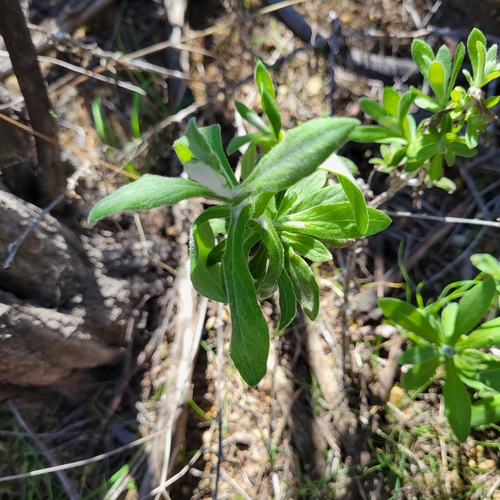
A silvery, aromatic sage with soft gray leaves and showy whorls of lavender-purple flowers. The flower stalks rise above the foliage in spring, then dry into handsome seed structures. Like other true sages, it has square stems and strongly scented leaves.
Ecological role
Purple sage blooms during the spring season when coastal sage scrub is coming alive after winter rains, offering nectar and pollen to native bees, honey bees, and hummingbirds. The flowers are arranged in showy whorls on the plant’s stems, creating a visually distinct display above the silvery-gray foliage. As the flowers fade, the plant produces seeds that feed birds through the season. The shrub itself grows densely enough to provide shelter and cover for insects and small animals in the dry scrub habitat. The resinous leaves release aromatic compounds when brushed, a chemical signature shared across many coastal sage scrub species.
Habitat & range
Dry coastal and inland slopes of Southern California and Baja California, often with California Sagebrush, California Buckwheat, Black Sage, and White Sage.
In the garden
Excellent for dry slopes, pollinator gardens, and aromatic native hedges. Give it full sun, sharp drainage, and little to no summer water once established. Light pruning after bloom keeps it dense.
Propagation
Grow from seed or semi-hardwood cuttings. Cuttings are useful for preserving a particularly good garden form.
Where to see it near you
- iNaturalist — observed in Orange County
- Dry slopes, native plant gardens, and coastal sage scrub restoration sites.
Problems
Short-lived with rich soil, poor drainage, or frequent summer irrigation. Keep it lean.