Santa Barbara Sedge
Carex barbarae · Cyperaceae
- Form
- Perennial
- Height
- 1-3 ft
- Sun
- Part Shade
- Water
- High
- Blooms
- Mar, Apr, May, Jun
🌿 California native
Quick facts · Habitat: Riparian shade, streambanks, wet meadows · Form / size: Clumping/rhizomatous sedge, 1-3 ft · Sun: Part shade to sun · Water: Moderate to high · Blooms: Spring-early summer · Pollinator value: Low
Description
A clean, grasslike sedge with arching green leaves and brownish seed spikes. Sedges have edges: the stems are typically triangular in cross-section, which helps separate them from true grasses and rushes.
Indigenous & historical use
The Maidu and Pomo harvested and split the long roots of this sedge as their premier basketry material. In S.A. Barrett’s 1908 study of Pomo basketry, the root of this sedge was “the most commonly used and most important” weaving material the Pomo had. The roots were dug in season, split to separate the outer layer from the inner core, then dried and stored, and the beds themselves were tended for productivity rather than casually foraged, part of the deliberate land management that shaped California’s riparian edges.
Ecological role
Wind-pollinated, so bees and butterflies don’t interact with it directly. Santa Barbara sedge spreads by rhizome through wet soil and builds dense clumps that settle into streambanks and under the shade of riparian trees. That structure does several jobs at once: the litter and stem density shelter insects, spiders, and amphibians, the seeds feed ground-foraging birds, and the root system locks the bank in place when floods come through, helping keep the channel from widening. On bare, recently eroded streambanks, where active scouring leaves the soil loose and unstable, an established stand spreads faster than most weedy annual grasses can germinate and forms a living mat that ties the bank together before the competition gets a foothold. That combination is why restoration practitioners reach for it in riparian work.
Habitat & range
Creekbanks, wet meadows, springs, and shaded riparian corridors. It is one of the most useful native sedges for stabilizing moist soil under trees.
In the garden
Excellent for shady bioswales, rain gardens, pond margins, and the damp understory beneath sycamores or oaks. It can make a soft, naturalistic groundcover where lawn would be too thirsty or too formal.
Propagation
Easy by division. Seed can be sown fresh, but division is the dependable garden/restoration route.
Where to see it near you
- iNaturalist — observed in Orange County
- Wet streambanks and shaded creek edges.
Problems
Needs moisture to look good. In dry shade it thins out.
Sources
- Calscape · iNaturalist · Wikipedia
- Indigenous use: Barrett, Pomo Indian Basketry (1908) · Anderson, Tending the Wild (2005) · Stevens 2020, Eco-cultural Restoration of White Root (Carex barbarae), Wetlands
Commonly confused with
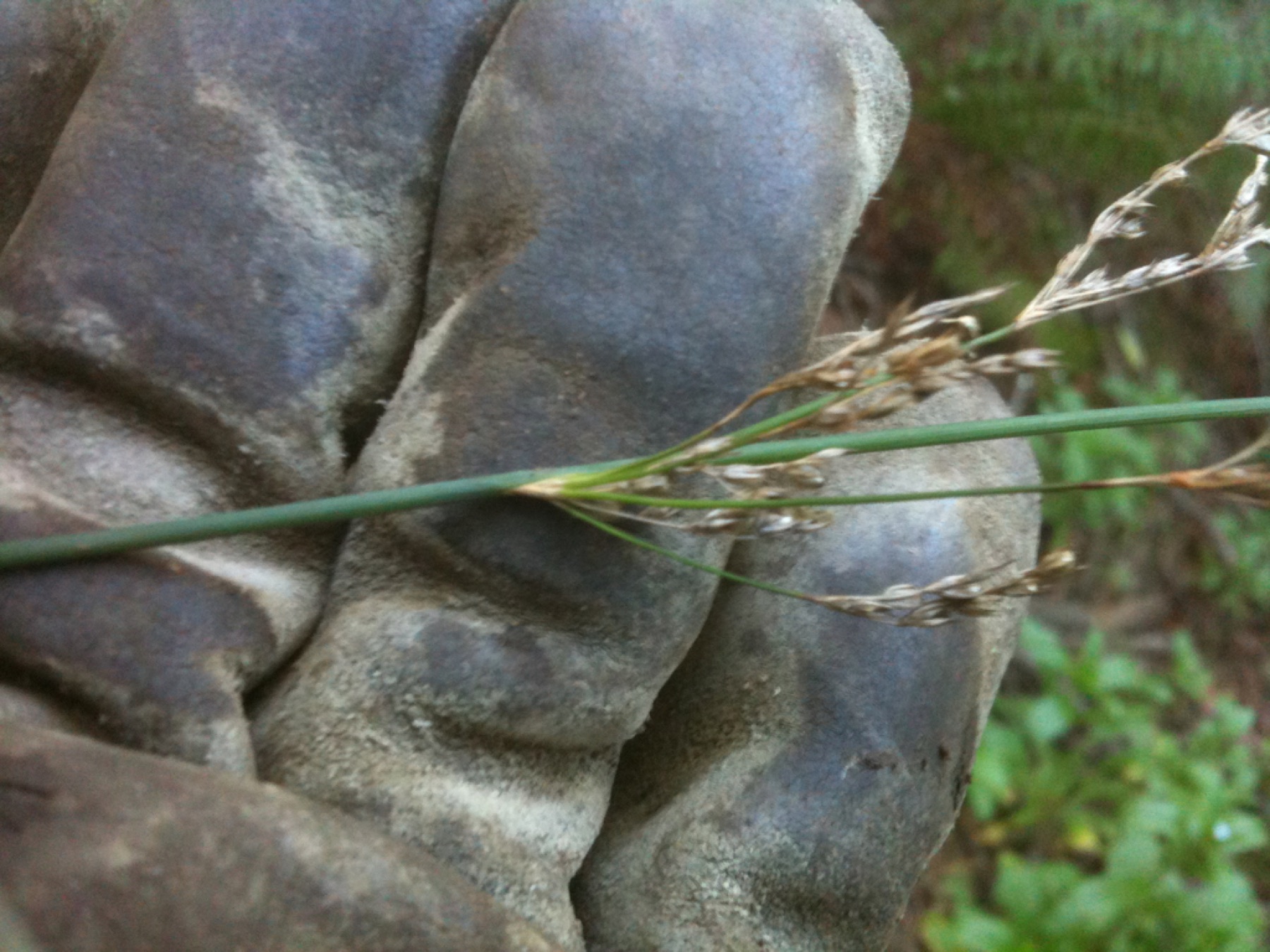 California Gray Rush 🌿 Juncus patens rush stems are round and more upright; sedge stems are edged/triangular.