Showy Goldenrod
Solidago spectabilis · Asteraceae
- Form
- Perennial
- Height
- 2–5 ft
- Sun
- Full Sun
- Water
- Moderate
- Blooms
- Jul, Aug, Sep
- Habitat
- Wetland · Riparian · Montane · Sagebrush Scrub
🌿 California native
Quick facts
- Habitat: Wet alkaline meadows, seeps, and lake margins in high basins
- Form / size: Rhizomatous perennial, 2–5 ft — the tall goldenrod
- Sun: Full sun · Water: Moderate to high (it wants wet feet)
- Blooms: Midsummer into fall · Pollinator value: High
Description
The tall goldenrod of wet, alkaline ground. A single plant sends up one or several stout stems to five feet, ending in a big upright or arching plume packed with small yellow heads — a well-grown array can carry a hundred of them. The stems and leaves are smooth and hairless, sometimes faintly fleshy, with only occasional rough patches. The tell that separates it from every other goldenrod around Big Bear sits at the bottom of the plant. It keeps a rosette of large paddle-shaped basal leaves, up to ten inches long, tapering into winged stalks, still there when the plant is in full bloom. Leaves going up the stem shrink steadily and lose their teeth. Each flower head has 5 to 15 short yellow rays, none longer than about 4 mm, around a center of 8 to 22 disc florets.
The other reliable clue is the ground itself. This is a plant of saturated, alkaline soil — look for pale crusted flats, sedges, and standing water in spring, not dry slopes.
Ecological role
Showy goldenrod is one of the plants that defines its habitat rather than just living in it. The CNPS vegetation classification names it in the Anemopsis californica – Helianthus nuttallii – Solidago spectabilis alliance, the alkaline meadow and seep community of California’s high basins — a system that has been drained, grazed, and built over across most of its former extent. Big Bear Valley still holds one of the better southern examples around the Baldwin Lake flats.
Its timing is what makes it valuable to insects. It comes on in midsummer and holds through fall, well after the spring wildflowers have gone to seed, so it feeds native bees, wasps, flies, and butterflies during the stretch when almost nothing else in a high meadow is producing pollen. Goldenrods get blamed for late-summer hay fever, which is a case of mistaken identity — goldenrod pollen is heavy and sticky and travels on insects, not wind. The plant actually filling the air in August is ragweed, blooming quietly nearby.
Habitat & range
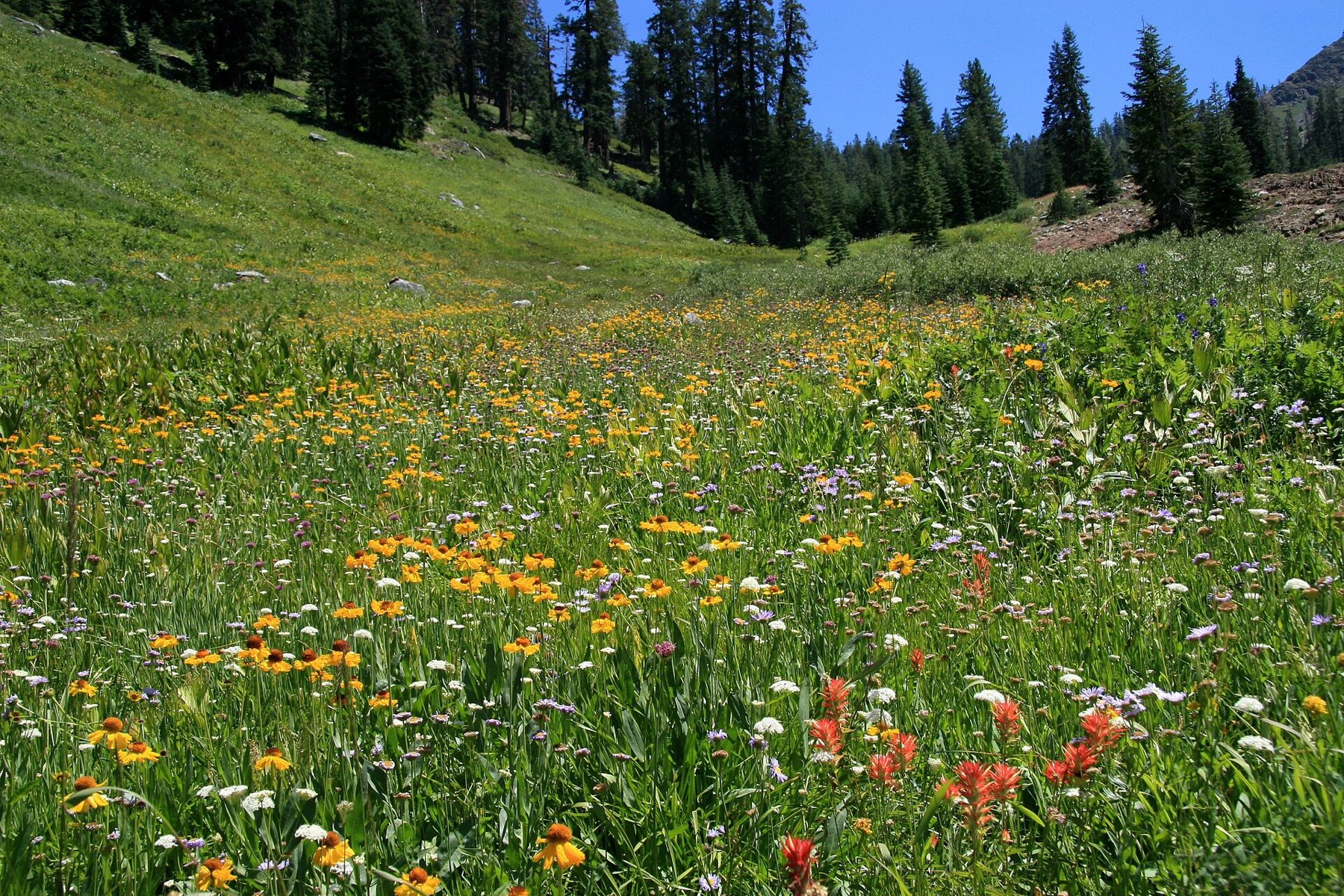
Wet meadows, seeps, streambanks, hot springs, and the moist margins of alkali flats through the Great Basin and its edges — California, Nevada, Oregon, Utah, and Arizona. In California it turns up in wetland-riparian ground threaded through sagebrush scrub, shadscale scrub, and alkali sink country. Around Big Bear it belongs to the wet, alkaline east end of the valley rather than the pine forest.
In the garden
A back-of-the-border perennial for a rain garden, pond edge, or any low spot that stays wet into summer. It is not a dry-garden plant. Give it full sun and room — it spreads by rhizomes and gets tall enough to flop if it is shaded or overfed. Cut it to the ground in late winter.
Propagation
Easiest by division: lift a rooted piece of rhizome in early spring, before growth starts, and replant it in wet ground. From seed, sow fresh on the soil surface without burying it (the seed needs light) and give it 30 to 60 days of cold-moist stratification over winter, either in a pot left outside or in the refrigerator. Seedlings need to stay wet through their first summer.
Where to see it near you
- iNaturalist — observed across California (map)
- Wet meadows and alkali flats on the east end of Big Bear valley.
Sources
Commonly confused with
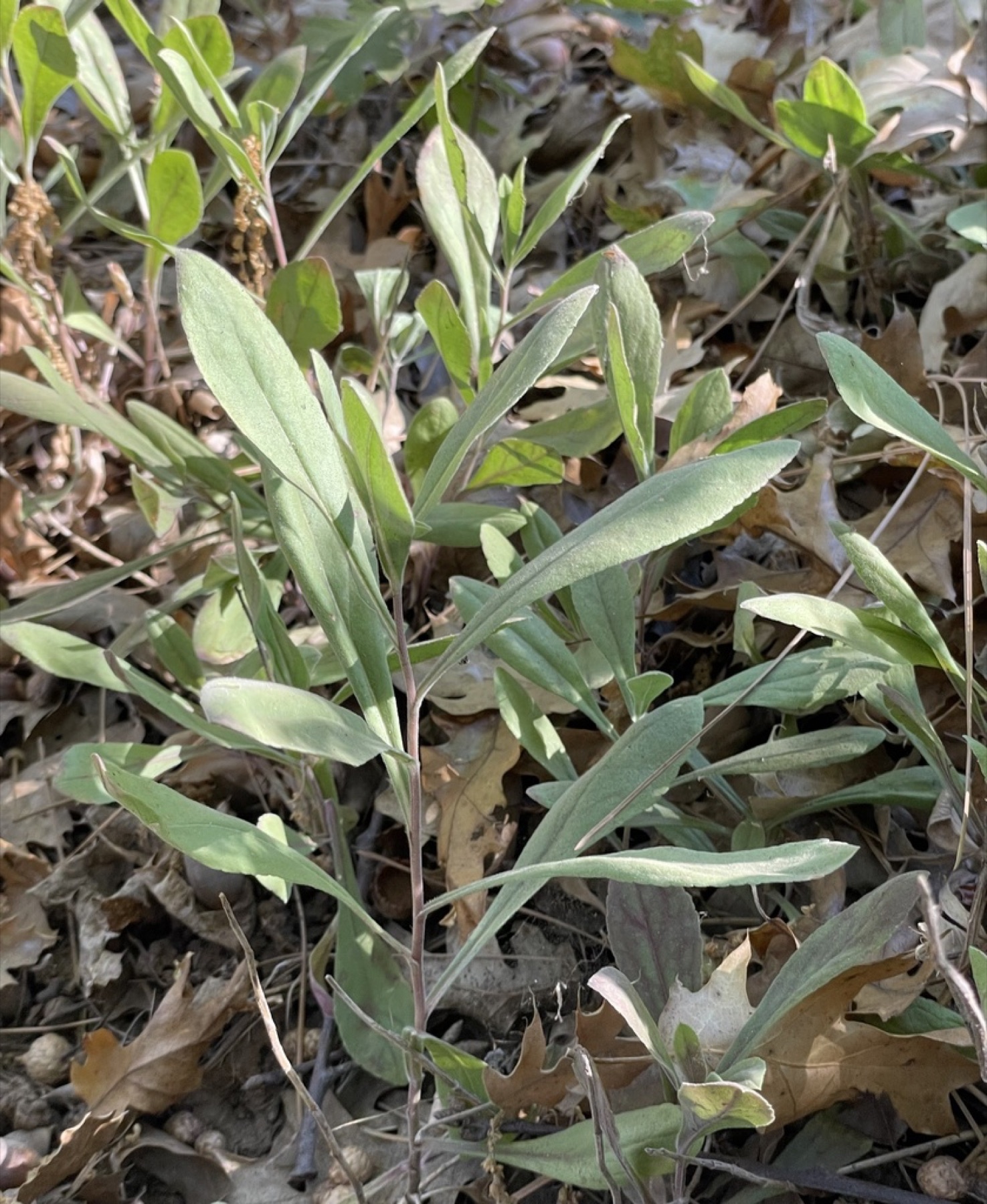 California Goldenrod 🌿 Solidago velutina the one you will actually have to separate around Big Bear, because both bloom yellow at the same time in the same valley. Three field checks, in order: rub a stem and a leaf between your fingers — velvety goldenrod is minutely hairy and feels soft and dry, showy goldenrod is slick and hairless. Look at the base of the plant — showy goldenrod keeps a rosette of big paddle-shaped leaves at ground level; velvety goldenrod's leaves are small and spread evenly up the stem with no rosette. Look at your feet — showy goldenrod stands in wet alkaline meadow, velvety goldenrod is happy on a moist roadside, ditch bank, or forest opening. Size helps too: showy goldenrod runs taller, to five feet.
 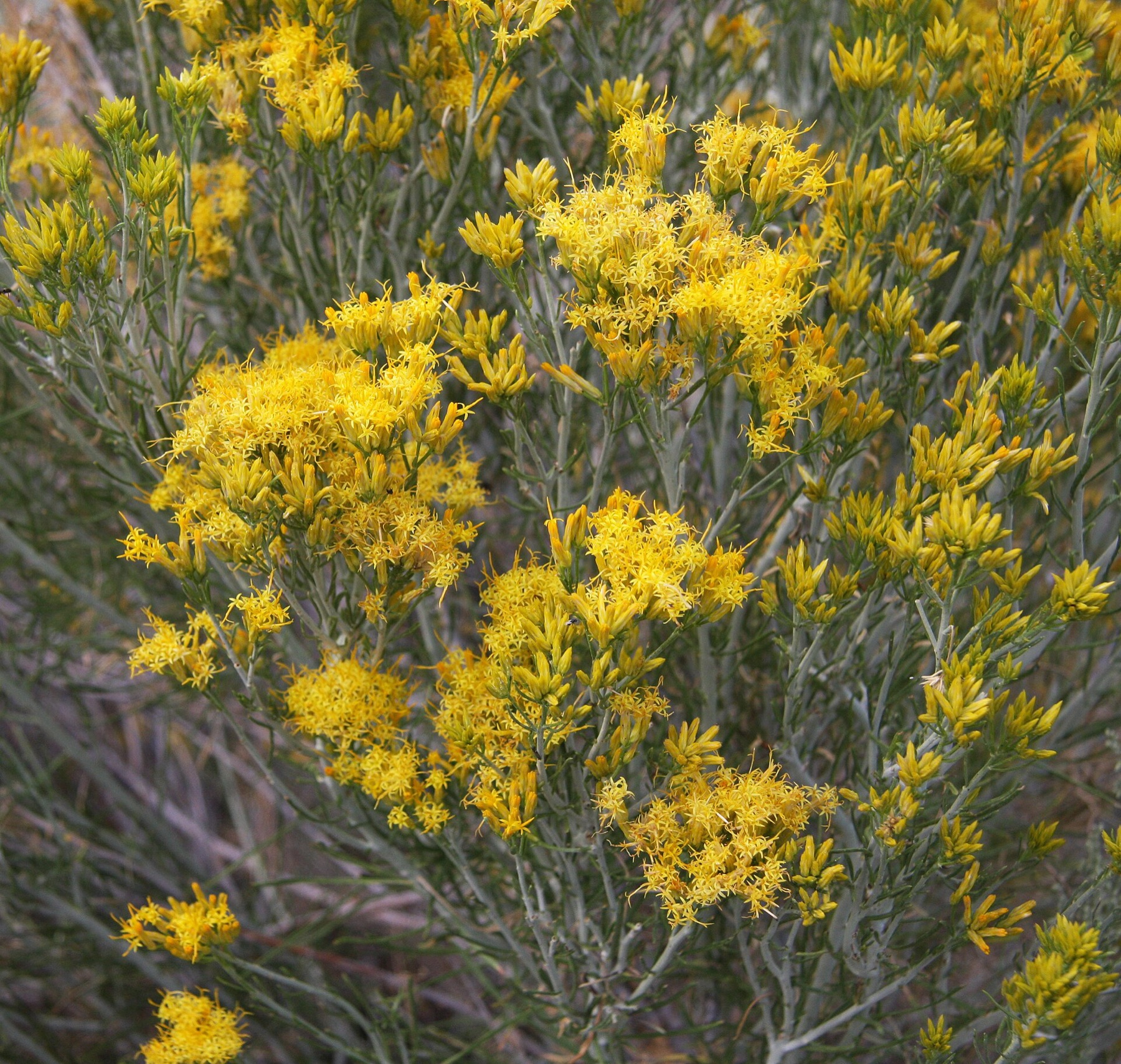 Rubber Rabbitbrush 🌿 Ericameria nauseosa gold at the same time of year and the mistake most people make from a car window. Rabbitbrush is a woody shrub: rigid branching stems that stand through winter as gray skeletons, and thread-thin gray-green leaves. Goldenrod is herbaceous and dies back to the ground. Get closer and the flowers settle it — goldenrod heads have small but visible ray petals around the edge, rabbitbrush heads are all disc, no rays at all. Crush a rabbitbrush twig and it smells sharp and rubbery; goldenrod barely smells.
 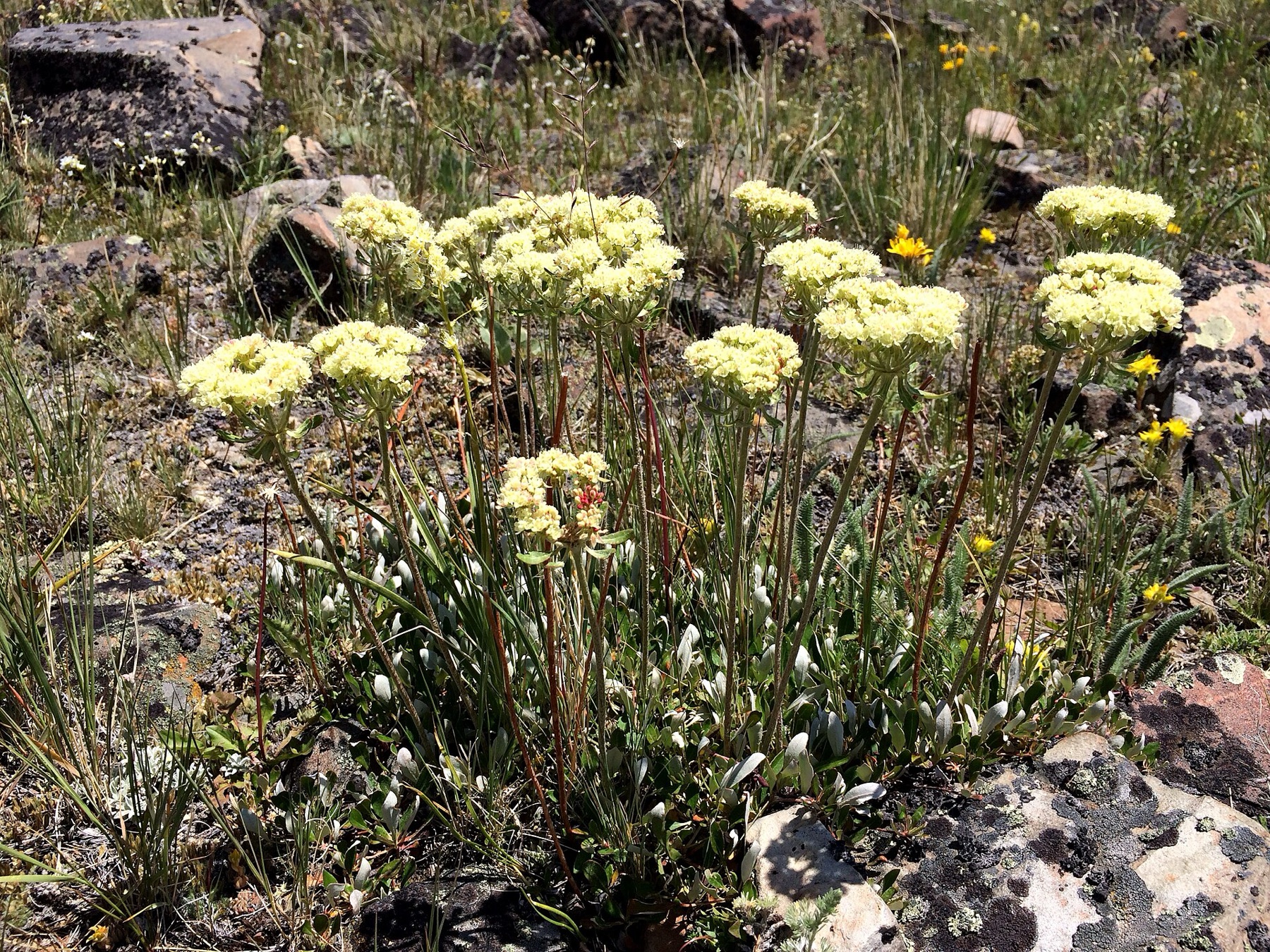 Sulphur Buckwheat 🌿 Eriogonum umbellatum also yellow on the dry side, but its flowers sit in flat-topped umbels on bare stalks above a mat of small spoon-shaped leaves, and it fades to rust rather than going to fluffy seed.