Narrowleaf Willow
Salix exigua · Salicaceae
- Form
- Shrub
- Height
- 6-20 ft
- Sun
- Full Sun
- Water
- High
- Blooms
- Mar, Apr, May
- Habitat
- Riparian
🌿 California native
Quick facts · Habitat: Sandy creekbanks, floodplains, wet washes · Form / size: Thicket-forming shrub, 6-20 ft · Sun: Full sun · Water: High · Blooms: Spring catkins · Pollinator value: High
Description
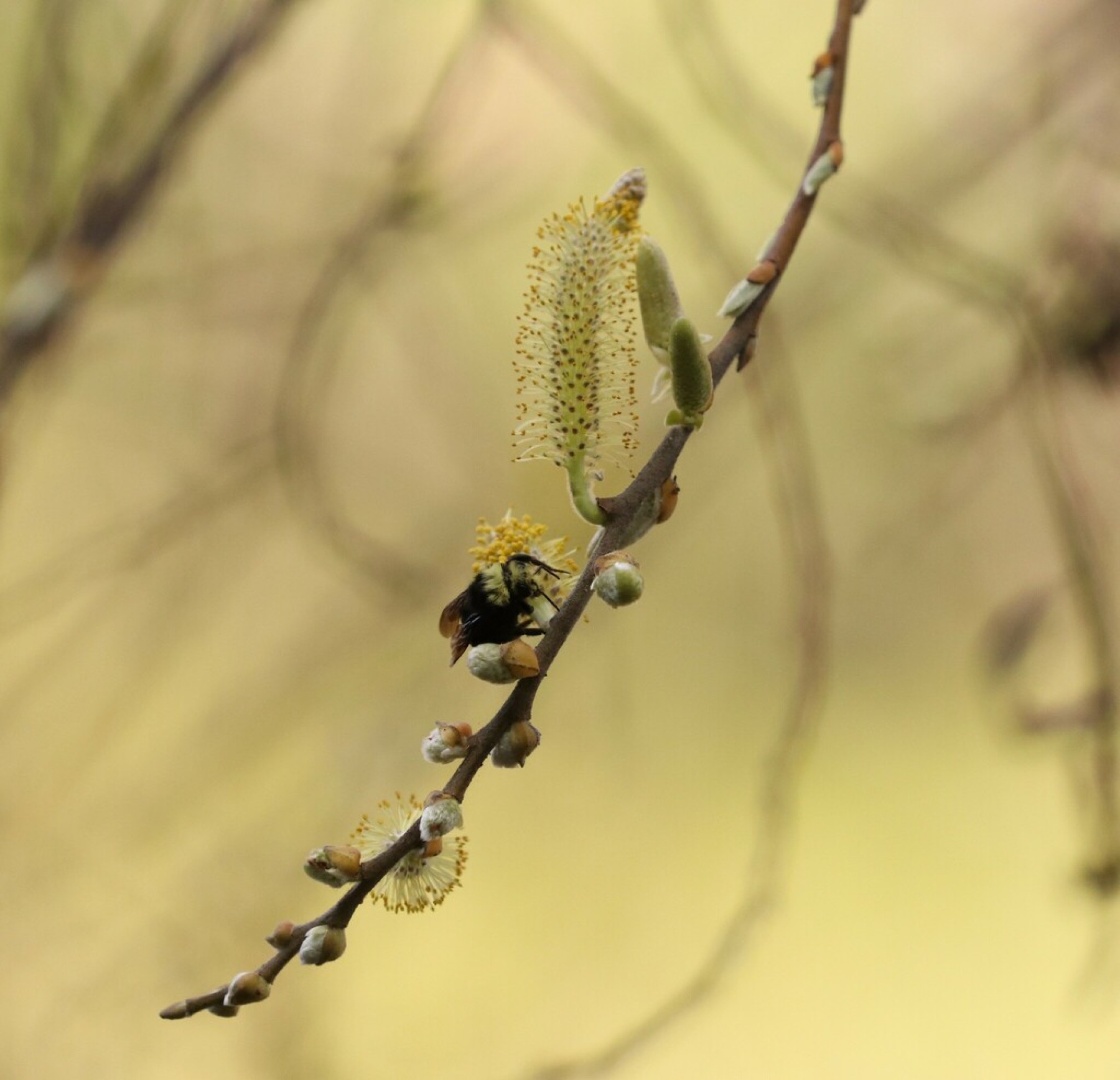
A narrow-leaved, thicket-forming willow of bars and creek margins. The leaves are long, slim, and often slightly silvery; the plant spreads by underground stems and can knit together loose sediment after floods.
Indigenous & historical use
The Cahuilla built coiled baskets on a foundation of narrowleaf willow withes and bent the larger limbs into cradle boards, and the Cahuilla and Kawaiisu made bows from its branches. The Pima framed their big outdoor storage baskets with it. Farther east the Zuni took an infusion of the bark for coughs and sore throats, documented by Camazine and Bye in 1980.
Ecological role
Narrowleaf willow is a pioneer species: it colonizes fresh sandbars and disturbed riparian ground before slower-growing riparian species move in. Its earliest catkins feed native bees in spring, and its roots spread through sandy soil and bind the sediment in place — on a sandbar freshly scoured by winter floods, narrowleaf willow’s root network is what anchors the ground again. Dense colonies also form shelter: young birds nest in the tangled thickets, and willow-associated insects and butterflies feed on the foliage. Because it grows fast and thicket-dense on ground other riparian species tend to skip over, it plays an outsized role in the early stage of creek recovery after disturbance, and in restoration work dense stands of it provide the structure other, slower species need to get established.
Habitat & range
Sandy or gravelly streambanks, floodplains, wet washes, and disturbed riparian ground. It is a classic pioneer on fresh alluvium.
In the garden
Best for restoration and erosion-control work, not small ornamental beds. Use where a spreading willow colony is useful: bioswale edges, pond margins, and raw banks.
Propagation
Very easy from live stakes and dormant cuttings. Plant into moist soil in winter and keep the lower end in contact with groundwater or reliable irrigation.
Where to see it near you
- iNaturalist — observed in Orange County
- Sandy creekbanks and open wet washes.
Problems
Spreading is the feature. Do not plant where a contained shrub is needed.
Sources
- Calscape · iNaturalist · Wikipedia
- Indigenous use: USDA NRCS Plant Guide: Salix exigua · Camazine & Bye 1980, Zuni ethnopharmacology (J. Ethnopharmacology 2:365–388) · Moerman, Native American Ethnobotany (Salix exigua)